
Airport transfers on account, invoiced once a month
Written for the person who books the travel and then has to reconcile it. One account, one monthly invoice against one purchase order, a VAT receipt for every journey, and a named person who picks up when a flight moves. Bristol city centre to the terminal, £39 fixed.
- One invoice a month
- VAT receipt per journey
- Cost centre on every line
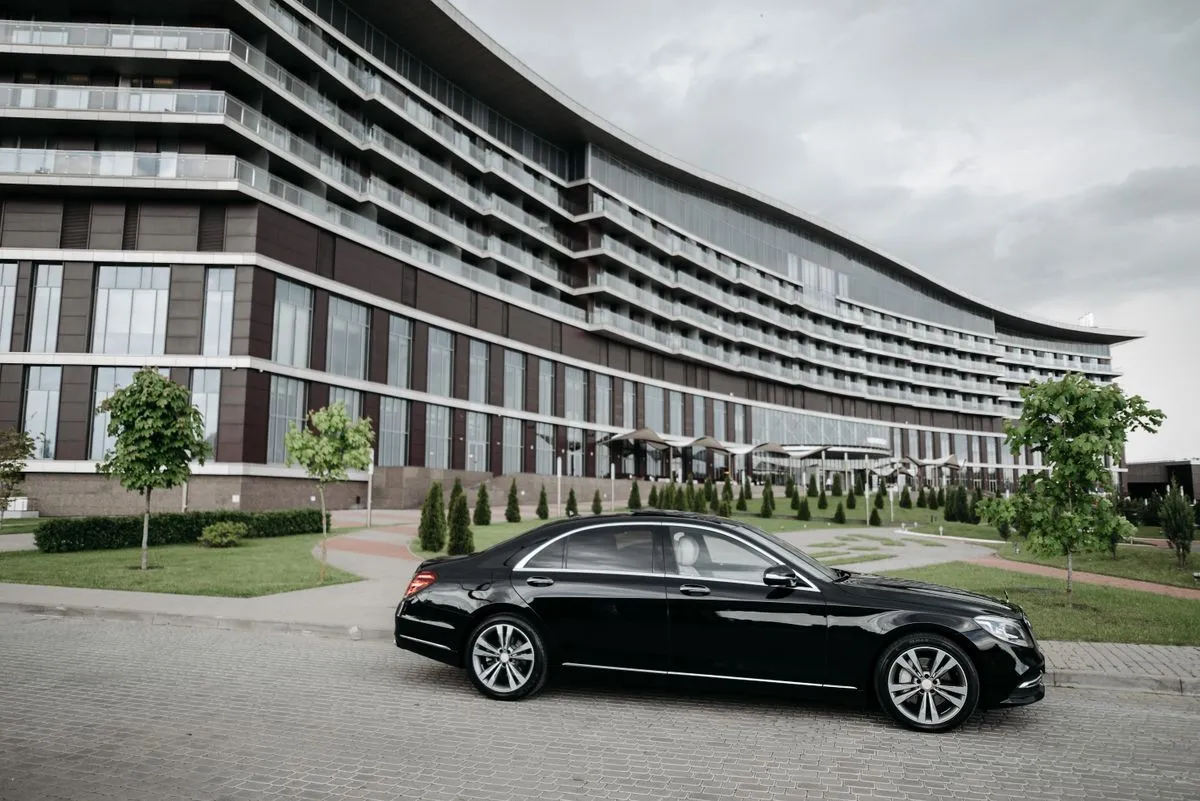
Sample photography, pending our own shoot
Open a corporate account
Five fields. No card details, no credit check at this stage. We reply promptly by email.
Nobody pays at the kerb
Every journey is prepaid to the account, so your people get in and get out. No card machine, no expense claim to type up on a Sunday evening, no receipt lost in a jacket pocket in Frankfurt.
One invoice, one purchase order
Every journey in the month lands on a single itemised invoice, sorted by cost centre and quoting the PO you gave us. Finance approves one document instead of fifty.
The price is agreed before travel
Fixed for the route, not for the hour. The same saloon from the city centre to the terminal is £39 at three in the afternoon and £39 at four in the morning.
How a taxi account actually works
Six steps, and only the first two involve you filling anything in. Most accounts are live soon after we hear from you.

-
01
You tell us the company and who is allowed to book
Company name, registered address, the billing email and the list of people who can raise a booking. Add or remove names later by emailing your account manager.
-
02
We agree credit terms in writing
We set out the credit terms in writing when the account opens. There is no minimum monthly spend and no joining fee.
-
03
Your people book by phone, email or the online form
They quote the account name and the passenger. No card is taken and no payment is asked for in the car. A booking confirmation goes to the booker and to the passenger.
-
04
Every booking carries your reference
Cost centre, project code, client name, employee number, whatever your finance system reconciles against. It is a free text field, so it matches your system rather than ours.
-
05
A VAT receipt is emailed after each journey
After each drop-off, as a PDF, showing the date, the route, the passenger, the reference and the VAT split. It goes to the booker and, if you want, straight to your finance inbox.
-
06
One itemised invoice each month
Every journey on one document, grouped by cost centre, quoting your purchase order, with a CSV alongside it for your expenses system.
What features should I look for in a business airport transfer service
Ten things. A price fixed before travel, flight tracking as standard, free waiting after landing, the driver named in advance, payment on account rather than at the kerb, a VAT receipt per journey, your own reference on every booking, a journey record you can produce if HR asks, cover outside office hours, and a licensed and insured operator. If a supplier cannot answer all ten in writing, they are selling you a car and not a service.
-
A price agreed before the journey
Ask whether the quote is a quote or an estimate. Ours is fixed for the route. Traffic on the A38 is our problem, not a line on your invoice.
-
Flight tracking included, not an extra
Give us the flight number and the pickup works from the live landing time. A three hour delay moves the car. It does not cost the passenger anything.
-
Free waiting time, stated in minutes
45 minutes free from the moment the aircraft lands. Ask any supplier for the number. If they answer with the word generous, ask again.
-
The driver named in advance
Name, vehicle, registration and mobile number sent the evening before. A travelling colleague should never be looking for an anonymous car.
-
Payment on account, not in the car
Prepaid to the account, so no card machine and no float in the car. The passenger does not become a purchasing agent at half past four in the morning.
-
A VAT receipt per journey
Emailed as a PDF, itemised, with the VAT shown separately so your bookkeeper does not have to work it backwards from a total.
-
Your reference on every line
Cost centre, project or client code carried from the booking through to the invoice line, so recharging is a filter rather than an investigation.
-
A journey record you can produce
Who travelled, which driver, which vehicle, what time they were collected and what time they arrived. Duty of care is a record, not a promise.
-
Somebody answering outside office hours
Most airport work happens before 6am and after 10pm. Ask who is on the phone at 4am. Ours is answered by a person, 24 hours a day.
-
A licensed and insured operator
A licensed private hire operator, with hire and reward insurance on every car. Ask any supplier to confirm both in writing.
The paperwork, and when it lands
Every document an account produces, what it contains and when it arrives.
| Document | When | Format | What it shows |
|---|---|---|---|
| Booking confirmation | Straight after booking | Passenger, route, time, vehicle class, fixed price, your reference | |
| Driver details | The evening before travel | SMS and email | Driver first name, vehicle make, registration, mobile number |
| VAT receipt | After each journey | PDF, one per journey | Net, VAT and gross split out, your reference, passenger name |
| Monthly invoice | Once a month | PDF and CSV | Every journey, grouped by cost centre, quoting your purchase order |
| Payment | On the agreed credit terms | BACS | One payment, one reference, one bank account |
Every booking is prepaid to the account, so there is no booking fee added at the kerb. The airport drop-off charge is inside the fixed price rather than added afterwards, which is covered in full on the ride page.
One purchase order, however many trips
Most finance teams would rather raise one PO for the year than fifty for the month. Give us the PO number when the account opens and it prints on every invoice until you tell us otherwise. If you work in periods instead, we will invoice to your period end dates rather than the calendar month.
If your organisation uses a procurement portal, send us the supplier onboarding pack and we will complete it rather than asking you to work around it.
Booking a car for somebody who is not you
Book it in the passenger's name, put your own number on it, and both of you get everything. The passenger receives the driver details and can contact the driver directly. You receive the same details, plus the confirmation and the receipt. Neither of you has to relay a message to the other at five in the morning.
-
The passenger never handles money
There is nothing to pay, nothing to reclaim and no receipt to keep. That is the entire point of an account.
-
Either of you can change it
The booker and the passenger can both move or cancel the booking by phone. The other one is told automatically by email.
-
You can book several people at once
One email listing four names, four pickups and one flight is enough. We reply with four confirmations and one price.
-
Standing bookings for repeat travel
Same person, same route, same time, every Monday. Set it once and tell us when it stops.
What the passenger gets, and when
The evening before travel, a text with the driver's first name, the make of car, the registration and a mobile number.
On the morning, nothing to do except be at the door. On the return, the driver is inside arrivals with a name board at the single arrivals exit.
And if a flight moves, the car moves with it. Nobody has to ring the office from an aircraft seat.
Knowing where your people are, and being able to prove it
Every journey creates a record, and you can ask for it. Who travelled, which licensed driver collected them, which vehicle and registration, what time the car arrived, what time they were dropped and by which route. That record is what a duty of care policy actually needs, and it is what a general taxi app cannot hand you in a readable form.

| Recorded | Detail |
|---|---|
| Passenger | Name as booked, plus the booker who raised it |
| Driver | Name and private hire driver badge number |
| Vehicle | Make, model, registration and licence plate number |
| Timings | Time dispatched, time on scene, time of drop-off |
| Route | Pickup and destination as booked, plus any diversion asked for on the day |
| Retention | Held as set out in our privacy policy |
Every driver on an account journey holds a current private hire driver licence and drives a plated, insured car. We are a licensed and insured private hire operator, and a procurement team can ask us to confirm our licensing in writing.
Late arrivals and lone travellers
A colleague landing at 23:40 into an empty terminal is the case an account is really for. The driver is inside the building rather than circling outside, they meet the passenger at the single arrivals exit, and they walk them to the car in the short stay car park directly opposite. Waiting is free for 45 minutes from touchdown, so a slow bag does not turn into a cancelled car.
If a passenger cannot find their driver, there is one number to ring and a person answers it, 24 hours a day. Your travel policy can name that number.
How do I book a group airport transfer for a team
Send one email with the flight, the number of people and the pickup points, and we reply with the vehicle plan and one total. We hold the vehicles while you get the trip approved, we confirm the number of cars in writing rather than on the phone, and the whole group can go on one invoice line or be split by cost centre.
-
01
Tell us the flight and the headcount
Flight number, date, how many people, how many large cases, and where everyone is starting from. One email is enough.
-
02
We send the vehicle plan and the total
How many cars, which class, who is in which car, one fixed total and the per person figure alongside it.
-
03
We hold it while you get sign-off
Enough time to get a signature. Nothing is charged and nothing is committed while it is held.
-
04
Confirmed in writing, then one invoice
Written confirmation listing every car and every passenger. Afterwards it appears on the monthly invoice, split by cost centre if you asked for that.

Two worked examples, using our published prices
Eight people, Temple Quay to Bristol Airport. Two saloons from £39 each is about £78 in total, roughly £9.75 a head. Both cars are booked to the same flight so they arrive together.
Four people, Bristol to Heathrow for an early transatlantic connection. One saloon from £179 is about £44.75 each, door to door, with the luggage in the boot rather than on a luggage rack at Temple Meads.
Groups of nine or more, or anything needing a minibus, are priced individually because the vehicle mix changes the answer.
Account prices are the published prices
An account does not buy you a discount, it buys you the paperwork. These are the same published starting fares anyone pays, in a saloon carrying up to 4 passengers and 2 large cases.
| Route | From | From, each of four | Typical use |
|---|---|---|---|
| Bristol city centre to Bristol Airport | £39 | £9.75 | The standard run, both directions |
| Bath to Bristol Airport | £59 | £14.75 | Bath offices and the university |
| Bristol to Cardiff | £109 | £27.25 | Cross-Severn meetings and Cardiff Airport |
| Bristol to Heathrow | £179 | £44.75 | Long haul connections out of LHR |
| Bristol to Gatwick | £229 | £57.25 | Early LGW departures with luggage |
The price we quote at booking includes all charges and taxes: the vehicle, the driver, the airport drop-off charge, waiting time within the free allowance, and VAT. It does not move for the hour of day, for demand, or for traffic. Prices for routes not listed here are quoted before you book and then fixed.
When a taxi account is not worth opening
If your company does two airport runs a year, do not open an account. Book them ad hoc, pay by card, and keep the two receipts. An account exists to remove administration, and two journeys a year do not generate enough administration to be worth removing. You would be swapping a two minute expense claim for a supplier onboarding form.
The rough line is somewhere around one journey a month. Below that, the card is simpler. Above it, the reconciliation starts to cost more time than the travel does, and that is the point at which one invoice and a cost centre column start paying for themselves.
There are two other cases where we are the wrong answer. If your travellers are mostly single people with hand luggage going to the terminal in daylight, the A1 Flyer bus is genuinely cheaper and runs frequently, and we say so in detail on the ride page. And if your organisation requires a full tendered framework agreement with service credits, we are a local operator rather than a national contractor, and you should say so early so nobody wastes a fortnight.
What we will not do is quote you a lower headline price and then add an airport charge, a card fee and a night surcharge to the invoice. If a supplier's quote is meaningfully cheaper than ours, ask them which of those three is missing from it.
Prices and policies on this page checked August 2026.
Questions travel managers actually ask
Is there a minimum monthly spend to open a corporate account?
No. There is no minimum spend, no joining fee and no monthly charge for holding the account. If you use it twice in a quarter the account simply sits there, and if you stop using it we close it on request rather than billing you for it.
Can we pay on account rather than by card?
Yes, that is the whole point of an account. Nobody pays in the car. Every journey in the month appears on one itemised invoice quoting your purchase order, payable by BACS on the agreed credit terms.
Do you send a VAT receipt for every journey?
Yes. A PDF VAT receipt is emailed after each journey, showing net, VAT and gross separately, along with the passenger name and your own reference. You can have it sent to the booker, to a finance inbox, or to both.
Can we put a cost centre or project code on each booking?
Yes. Every booking takes a free text reference, so it matches whatever your finance system uses rather than a format we have chosen. The reference is carried through to the VAT receipt and to the invoice line, and the monthly invoice is grouped by it.
Can I book a car for a colleague without travelling myself?
Yes. Book it in the passenger's name and add your own mobile number. The passenger gets the driver's name, vehicle, registration and mobile number the evening before, and you get the same details plus the confirmation and the receipt. Either of you can change or cancel it.
What happens if my colleague's flight is delayed?
We track the flight number and work from the live landing time, so the pickup moves on its own. Nobody needs to ring us from the aircraft. Waiting is free for 45 minutes from touchdown, and there is no extra charge for the delay itself. If the flight diverts to another airport, ring us and we will requote the new journey.
How long does it take to open an account?
Send the form on this page and we reply promptly with the account form and the credit terms. Most accounts are ready to book against soon after. If you need a car before the account is live, book it ad hoc and we will move it onto the account afterwards.
Can we change or cancel a booking, and what does it cost?
There is no cancellation charge if you cancel at least 24 hours before pickup. We refund what you paid, less the card processing fee of about 2.5% that the card company keeps. Call us any time to arrange a refund, and changes can usually be made whenever a car is free.
Is an account cheaper than booking each trip separately?
No, and we would rather say so. Account customers pay the same published fixed fares as everyone else. What the account removes is the card at the kerb, the expense claim, the missing receipt and the fifty separate invoices. It buys time back from finance, not money off the fare.
Open the account, then stop thinking about it
Five fields to start. We come back with the terms, the price list for your usual routes and the name of the person who will be looking after you.
A person answers on 0117 471 7170 at any hour. Account bookings taken 24 hours a day.